


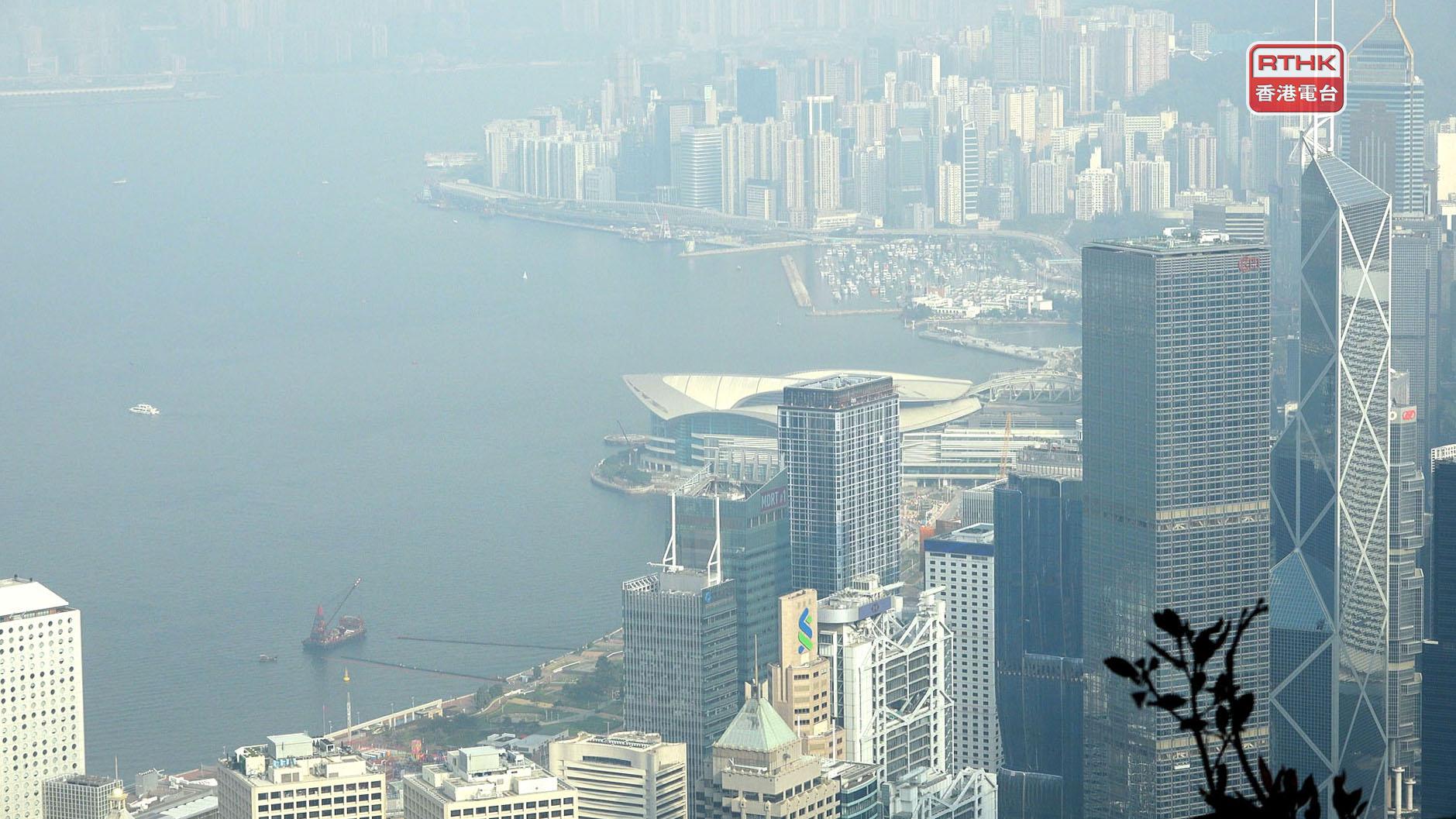
The government on Monday said Hong Kong would work to deepen connectivity with the mainland and the world, as part of efforts to further consolidate its status as an international financial centre (IFC) and a hub for global trade under its own five-year plan.
According to official documents released on Monday, the SAR government would also work to deepen the "cooperative development" of the equity, bond, asset and wealth management sectors, as well as the insurance and risk management markets, so as to enhance the city's role as a global offshore renminbi centre.
The release of the documents came as Hong Kong kicked off its two-month public consultation for its first-ever five-year blueprint, which is expected to be published in the third quarter of the year.
In the consultation paper, officials noted Hong Kong's development plan should seize opportunities arising from the changing global economy, geopolitical risks, supply chain restructuring, and digital transformation, to drive high-quality growth of major sectors, including finance, trade, as well as the maritime and aviation industries.
"Hong Kong needs to continuously deepen its financial market, strengthen connectivity with the mainland and international markets, expand its international trade network, and step up efforts to attract businesses and investment," the paper said.
Among the proposals is the enhancement of the Mainland and Hong Kong Closer Economic Partnership Arrangement to ramp up trade with the mainland.
Officials would also work on assisting more mainland enterprises to "go global" while luring overseas firms to set up shop on the mainland, and attracting international investment into the country.
To enhance the city's financial competitiveness, officials also proposed promoting the "Finance plus" strategy, which aims to integrate financial services with high-growth sectors, such as artificial intelligence and green energy.
Hong Kong would also work to build a commodities trading ecosystem.
Elsewhere, Hong Kong would expand its collaboration with cities in the Greater Bay Area to advance technological innovation and develop so-called "emerging industries".
Such collaboration would not only cover "hard connectivity" in building infrastructure, but also cover "soft connectivity" in aligning rules and standards and cross-border transport.
On the deepening of regional and international cooperation, Hong Kong would work to participate in high-quality collaboration efforts with member states under the Belt and Road Initiative as well as Association of Southeast Asian Nations in areas such as trade, commerce, finance, I&T, education, culture, and professional services.
Edited by Tony Sabine
HK to consolidate as IFC under its 5-year plan
2026-06-15 HKT 17:13
Share this story


2026-10-11 HKT 11:57
2026-10-10 HKT 12:06
2026-10-10 HKT 11:57
2026-10-09 HKT 20:34
2026-10-08 HKT 17:31
2026-10-08 HKT 13:51
2026-10-08 HKT 12:29
2026-10-07 HKT 16:52
2026-10-07 HKT 12:20
2026-10-07 HKT 11:26
2026-10-06 HKT 16:37
2026-10-06 HKT 11:36
2026-10-05 HKT 11:40
2026-10-04 HKT 12:52
2026-10-03 HKT 16:51
2026-10-02 HKT 15:50
