


Hong Kong can work on building an "aviation silk road" by leveraging the city's expertise in cold chains and specialty cargo services, a lawmaker has proposed.
Commercial sector legislator Jonathan Lamport added the SAR should strive to enhance its connectivity with the Middle East and Central Asia, while strengthening ties with traditional trading partners.
His proposals came as the government is racing against the clock to publish Hong Kong's inaugural five-year plan by the third quarter of this year. A two-month public consultation began last week.
In an interview with RTHK, Lamport noted how more companies are switching to air freight, ditching the sea routes which have become unstable in the past few months because of the Middle East conflict.
"High-value goods, such as pharmaceutical goods, high-value food, products, they switch from traditional transportation to cargo cold chain," he said.
"And I can see that they're really happy for this kind of services... We can see that a lot of companies switched to using it, and this... is also very helpful for emerging markets that come to Hong Kong to set up a company."
He expects the future Northern Metropolis will further boost demand for cold chain cargo services, as high-value added industries are set to move into the tech hub.
Lamport, who's also a member of the Hong Kong General Chamber of Commerce, stressed that apart from attracting strategic enterprises, the SAR must also keep exploring markets.
While emerging markets such as the Middle East and Central Asia deserve attention, he urged businesses to also strengthen ties with existing ones.
"In the first six months of this year, a lot of European leaders have visited Beijing, and we have built even stronger relationship than before. Hong Kong has been doing business with the European market for a long, long time. They are our long-term partner," he said.
"Also, a lot of European companies have set ups in Hong Kong – already in the second or third generation. So Hong Kong can take this advantage to work on those markets as well."
Edited by Raymond Yeung
'Aviation silk road' will greatly benefit HK: lawmaker
2026-06-22 HKT 07:30
Share this story


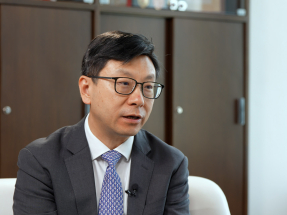
Lawmaker Jonathan Lamport speaks to Janice Lo


2026-10-11 HKT 11:57
2026-10-10 HKT 12:06
2026-10-10 HKT 11:57
2026-10-09 HKT 20:34
2026-10-08 HKT 17:31
2026-10-08 HKT 13:51
2026-10-08 HKT 12:29
2026-10-07 HKT 16:52

2026-10-07 HKT 12:20
2026-10-07 HKT 11:26
2026-10-06 HKT 16:37
2026-10-06 HKT 11:36
2026-10-05 HKT 11:40
2026-10-04 HKT 12:52

2026-10-03 HKT 16:51
2026-10-02 HKT 15:50
