


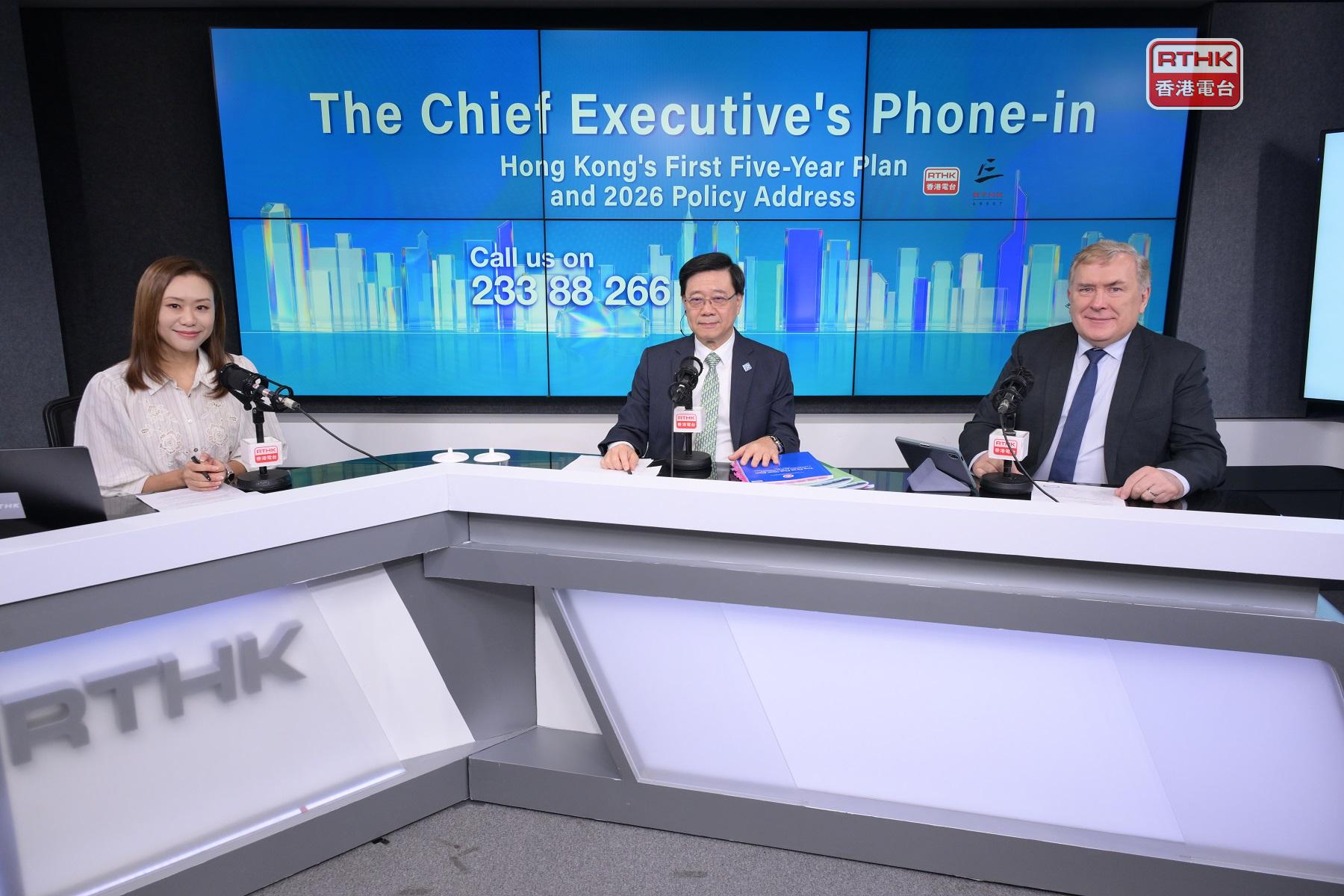
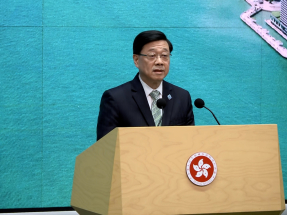
Hong Kong's massive Northern Metropolis project is an opportunity for the city to diversify its economy and upgrade living conditions, Chief Executive John Lee told an RTHK phone-in programme on Friday – saying the initiative will provide more room for people to live, work and play.
"Northern Metropolis represents about one-third of our geographical area – so it is a big piece of land that gives us new opportunities,” Lee said.
He said while the city has in the past excelled in specific fields such as trade, shipping and finance, the Northern Metropolis will give space for a more diverse range of industries to grow, creating more jobs with higher pay.
"Imagine all of a sudden your house becomes one-third bigger. You can put in a lot of things, you can have more activities,” Lee said. “So it's not just living more comfortably, but you can be healthier, happier, and... enjoy life better."
The Chief Executive expressed confidence in the project, noting that it is also part of the national Five-Year Plan and will be backed by the central government to ensure its success.
Asked by a caller about how to secure the territory’s future workforce, Lee noted that authorities are anticipating a shortfall of 130,000 workers by 2028 – a figure that’s lower than anticipated thanks to government efforts to import talent.
He said Hong Kong has already attracted 300,000 workers from across the world since he took office four years ago, but the government won’t let up in the global race for talent.
"We have met our targets better than we set. But I don't intend to change the target because the world is competing amongst ourselves," he said.
"So this talent... if he doesn't join my side, he joins the competitor's side. You have this competition game, so I have to ensure that Hong Kong has the best people."
Lee told another caller concerned about government support for smaller businesses that the government will help empower SMEs by assisting them in adopting new technology.
He said a new AI-powered city management system called “AI City Brain” can help by using big data pooled from a variety of sources to identify potential gaps in demand to help the day-to-day running of businesses.
“We have 18 districts – what are the specialities and what are the shortcomings? Are we oversupplying in some areas or undersupplying in others?
“That will ensure that businesses will be focusing [their attention at the right places] and people will get the best services.”
SME operator Jeffrey called in to ask the CE how to get through red tape more easily, saying he had contacted the government about some issues but received no response.
Lee pointed to planned improvements in the government’s 1823 hotline outlined in his latest policy address, where problems that require multi-agency solutions will be better coordinated by empowering officers to lead a multi-departmental response.
“The first department to receive a request for assistance will have to then own it… I’ve said that you will lead it, and other [departments] will have to accept your leadership, and you have to be able to coordinate everything and get the result,” Lee explained.
The CE also said AI will be strategically used to help the government shift to a more proactive mindset where issues are addressed at a much earlier stage.
"We use AI to tell us if a particular area every now and then receives problems of this nature, then go out, scout the place, identify the problems, and do preventive action so that the problem is resolved itself without a complaint being received.
"So, proactive action… preventive action will be the key and the theme. AI can help us, and this commissioner for AI will help us to implement this policy."
Lee said despite recent concerns about the destructive potential of AI, he believes the technology does more good than harm, and the government's policy is to encourage AI knowledge while making sure the public understands the potential risks, especially the impact on young people.
Edited by Cecil Wong
Northern Metropolis gives space for HK to grow: CE
2026-09-18 HKT 11:41
Share this story


2026-10-08 HKT 17:31
2026-10-08 HKT 13:51
2026-10-08 HKT 12:29
2026-10-07 HKT 16:52

2026-10-07 HKT 12:20

2026-10-07 HKT 11:26
2026-10-06 HKT 16:37
2026-10-06 HKT 11:36

2026-10-05 HKT 11:40

2026-10-04 HKT 12:52
2026-10-03 HKT 16:51

2026-10-02 HKT 15:50

2026-10-02 HKT 11:28
2026-10-01 HKT 11:06
2026-09-30 HKT 13:01

2026-09-30 HKT 12:12
