


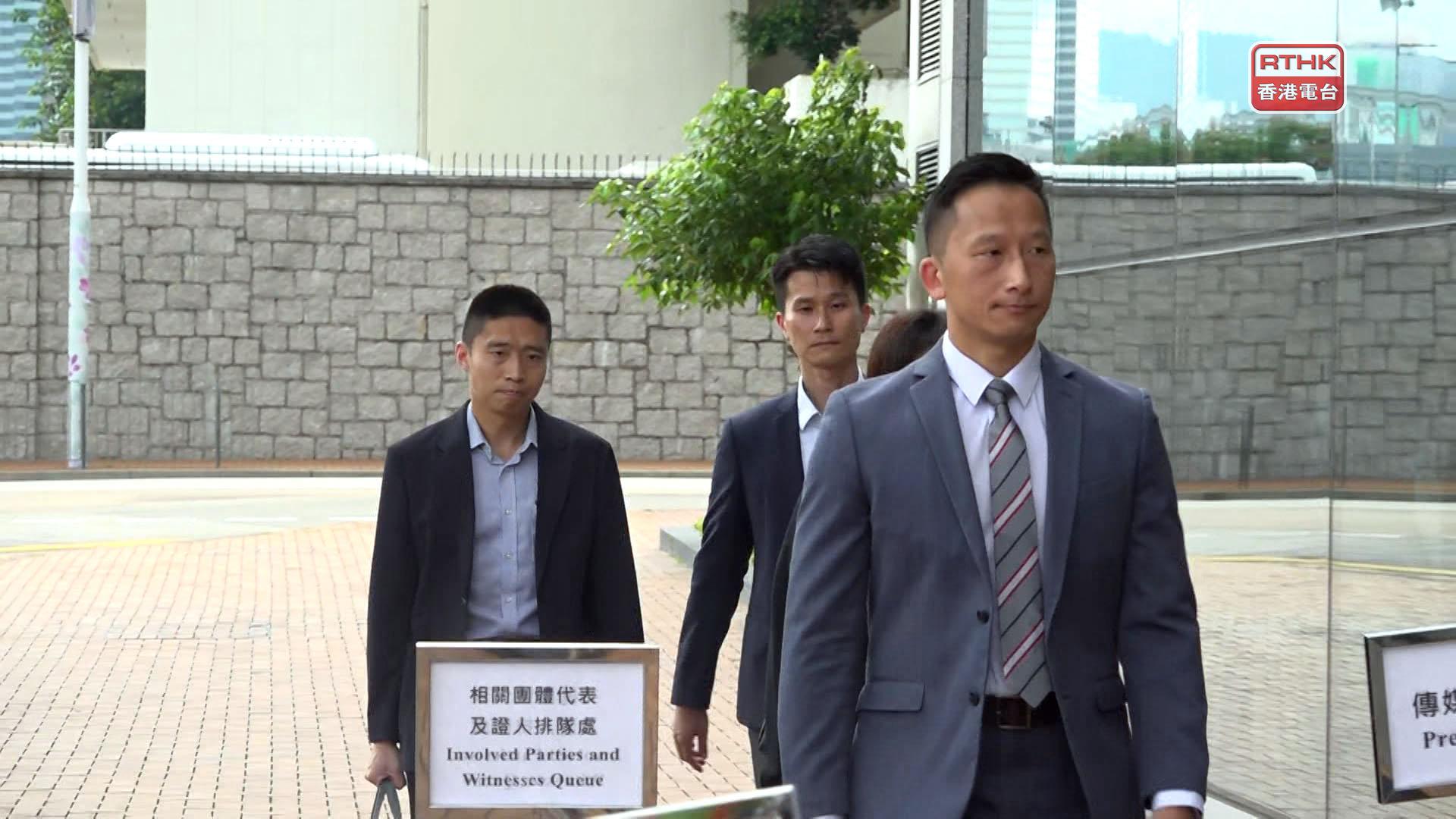
Sufficient manpower and technical incompatibility were the reasons the Fire Services Department (FSD) decided it was unnecessary to seek help from Guangdong counterparts during the Wang Fuk Court blaze, an official told the inquiry probing last November’s inferno on Wednesday.
Sunny Wong, the deputy chief fire officer responsible for operational support and professional development, said he was notified at around 10pm on the day of the fire that Guangdong had 100 firefighters on standby at the border who were ready to assist.
However, Wong said the SAR's fire services had already deployed 980 firefighters, eight times the number usually sent to a No 5 alarm fire.
He noted that approximately 1,700 personnel can be deployed on any given day, asserting that there was more than enough manpower available.
Wong also pointed to technical incompatibilities between the Hong Kong and mainland services, such as different breathing apparatus systems.
He cited communication as another hurdle, noting that while Hong Kong firefighters use the English term “Mayday” when in danger, mainland counterparts use a term in Mandarin.
Wong stressed that such differences would make communication in a hostile environment even more difficult.
The inquiry was also told that the FSD received 373 calls for assistance on the day of the fire, the majority of which were transferred from the police 999 call centre.
The committee’s senior counsel, Victor Dawes, noted that a backlog had occurred regarding the transfer of calls between the two departments that day.
In one case, a caller had to wait 15 minutes before being connected to the FSD.
Several emergency recordings were played during the hearing, including a call from a woman living on the 17th floor of Wang Cheong House.
The call from the woman, who later died, was not transferred to the FSD because she did not explicitly state that she required its help when questioned by the call centre operator.
Wong conceded that the situation was not optimal, adding that it should not be up to the caller to decide if they need help.
He also agreed there is room for improvement in communication between the police call centre and the FSD.
Before Wong started testifying, the committee's chairman, David Lok, noted that he was aware of calls in media reports for a Commission of Inquiry to be formed.
Such a move would come with the statutory power to summon individuals who might otherwise decline to appear at hearings.
Lok said the committee is monitoring the situation and will announce its approach to handling the matter in due course.
Cheng Ka-chun, the police officer in charge of the Disaster Victim Identification Unit (DVIU), was one of the witnesses who testified in the afternoon.
He told the inquiry that the DVIU made five visits to the seven fire-ravaged buildings at the estate to search for remains, and stressed that his team had searched “every inch” of the buildings.
Of the 74 body parts and sets of remains collected for further analysis, two were confirmed to be from a cat and a dog, while another 12 were also found to be of non-human animal origin.
Cheng said based on these findings and his judgement, there was no evidence to suggest the death toll exceeded the 168 fatalities confirmed.
Edited by Thomas McAlinden
'Mainland help not needed for Wang Fuk Court fire'
2026-04-15 HKT 17:11
Share this story


2026-10-11 HKT 17:58
2026-10-06 HKT 12:52
2026-09-15 HKT 13:56
2026-09-09 HKT 22:14
2026-09-03 HKT 17:12
2026-09-01 HKT 11:34
2026-08-31 HKT 21:05
2026-08-29 HKT 15:10
2026-08-28 HKT 15:23
2026-08-25 HKT 16:43
2026-08-23 HKT 11:38
2026-08-18 HKT 13:29
2026-08-12 HKT 15:20
2026-08-01 HKT 11:12
2026-07-30 HKT 13:59
2026-07-25 HKT 13:18
