


Local business representatives welcomed Hong Kong's inaugural five-year plan, saying the initiatives offer strategic guidance and add certainty amid a volatile global landscape.
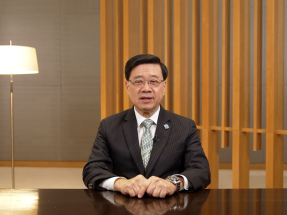
Announcing the plan on Wednesday, Chief Executive John Lee vowed to strengthen the city's status as a global offshore renminbi hub, with concerted efforts to establish a commodity trading ecosystem.
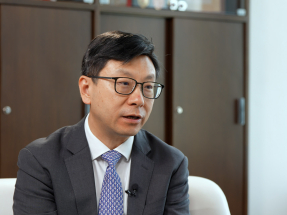
Business sector lawmaker Jonathan Lamport said the blueprint aligns closely with the country's 15th Five-Year Plan and offers investors and companies an indication of which industries they can explore.
"The centres are actually highly interconnected. For example, [if] you're building a commodity and gold trading ecosystem, [it] directly boosts the physical warehouses in the Northern Metropolis," he said.
"That also means that we're now promoting the commodities... and gold vaults in Hong Kong.
"And this is good for... how we always say, 'how to [go] from a super connector, to... a golden partner'. So people can come here, set up a company to do this kind of business."
Jacob Kam, chairman of the Hong Kong General Chamber of Commerce, described the five-year blueprint is "forward-looking".
"From accelerating the Northern Metropolis, driving tech innovation, and bolstering our financial core, to deepening Greater Bay Area integration... this will help drive robust economic growth and create broader opportunities for the business community, ultimately shaping a brighter future for Hong Kong," he said.
Looking ahead, the chamber called for more public investment in yacht and marina infrastructure to support the growth of high-value marine tourism.
The Federation of Hong Kong Industries said the five-year plan enables industries to gain a "clearer understanding" of the city's future industrial layout.
"More importantly, the five-year plan and the policy address have proposed several directions closely related to industrial development," chairman Anthony Lam said.
"These include accelerating the construction of the Northern Metropolis, promoting new industrialisation, developing artificial intelligence applications, building a commodity trading ecosystem, and creating high-value-added supply chain services."
Lam added that the federation will identify new growth drivers and work with the sectors to improve the city's industrial competitiveness.
Edited by Raymond Yeung
Blueprint offers certainty, clarity: business groups
2026-09-16 HKT 21:44
Share this story


Lawmaker Jonathan Lamport speaks to Janice Lo


2026-10-11 HKT 11:57
2026-10-10 HKT 12:06
2026-10-10 HKT 11:57
2026-10-09 HKT 20:34
2026-10-08 HKT 17:31
2026-10-08 HKT 13:51
2026-10-08 HKT 12:29
2026-10-07 HKT 16:52
2026-10-07 HKT 12:20
2026-10-07 HKT 11:26
2026-10-06 HKT 16:37
2026-10-06 HKT 11:36
2026-10-05 HKT 11:40
2026-10-04 HKT 12:52

2026-10-03 HKT 16:51
2026-10-02 HKT 15:50
